You spend the evening avoiding caffeine, put your phone away before bed and try to sleep at a reasonable hour. Yet falling asleep still feels difficult, and mornings begin with a familiar sense of tiredness.
Sometimes, an overlooked part of the solution lies in what happens much earlier in the day.
Morning sunlight benefits for sleep are connected to how natural light influences the body’s internal clock. Regular exposure to daylight helps the brain distinguish between periods of activity and rest, supporting a more consistent sleep-wake rhythm.
Understanding this connection can make sleep wellness less about complicated nighttime routines and more about sustainable everyday habits.
How Does Morning Sunlight Affect Your Sleep?
Our bodies follow an internal timing system known as the circadian rhythm.
This approximately 24-hour cycle influences sleepiness, alertness, body temperature and the timing of certain hormones.
Light is one of the most important environmental signals regulating this system.
When natural light reaches the eyes, specialised cells transmit signals to the brain’s central biological clock. These signals help align the body’s internal timing with the external day-night cycle.
Morning light generally encourages an earlier circadian schedule, while bright light late in the evening can shift the body clock later.
This is why the timing of light exposure matters, not simply the amount of light received.
Three Morning Sunlight Benefits for Sleep and Daily Wellness
1. Supports a Consistent Sleep-Wake Cycle
Exposure to natural daylight after waking can help reinforce the distinction between daytime activity and nighttime rest.
For people following a conventional daytime schedule, consistent morning light exposure may support more regular sleep timing.
It works best alongside reasonably consistent waking and sleeping hours.
2. Encourages Daytime Alertness
Bright light signals that it is daytime and can contribute to increased alertness.
For working professionals who begin their mornings indoors, stepping outside provides an opportunity to experience natural daylight before spending extended hours under artificial lighting.
This does not replace adequate sleep, but it can support the body’s normal daytime signals.
3. Creates a Mindful Beginning to the Day
Morning outdoor time can become an opportunity to establish a calmer routine.
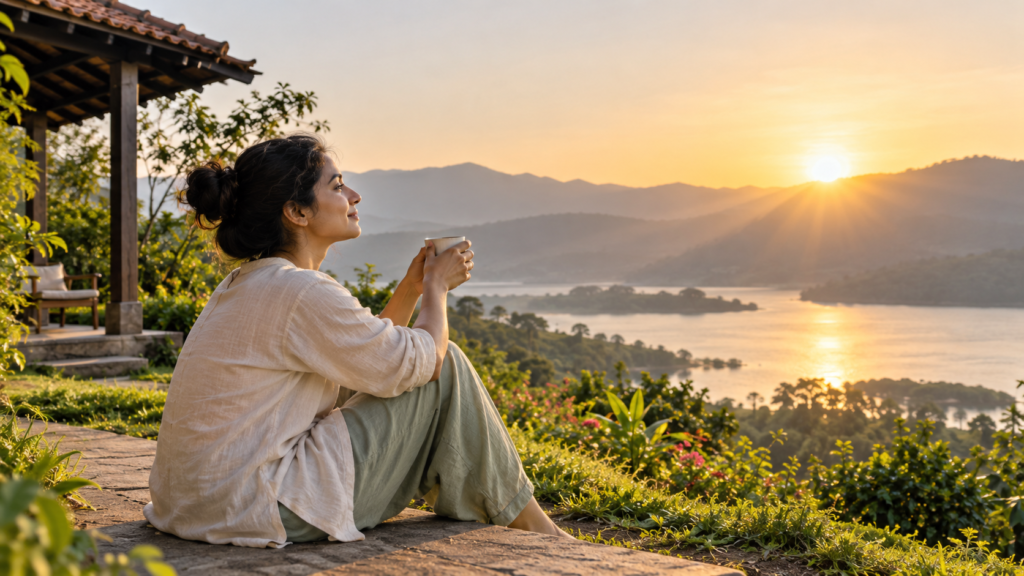
A short walk, sitting in a shaded garden or spending time in an open outdoor space provides a natural transition between waking and daily responsibilities.
The value extends beyond light exposure. It creates space for gentle movement, observation and a more intentional start to the day.
How Much Morning Sunlight Do You Need?
There is no universal duration that works equally for everyone.
The influence of daylight depends on its brightness, timing, duration, individual sensitivity and existing sleep schedule.
The US National Institutes of Health recommends spending at least 30 minutes outdoors in natural daylight each day as a general healthy sleep practice.
You do not need to stare directly at the sun. In fact, doing so can damage your eyes.
Outdoor daylight can reach your eyes indirectly while you walk or sit outside. Appropriate shade, clothing and sunscreen remain important for skin protection.
People with light-sensitive medical conditions or medications should seek personalised guidance.
Simple Ways to Build a Morning Light Routine
Improving sleep habits does not require completely reorganising your schedule.
Begin with manageable adjustments.
Step outside after waking. Spend some time on a balcony, terrace, garden or outdoor walking path where daylight is accessible.
Pair daylight with gentle activity. A comfortable morning walk combines natural light exposure with physical movement.
Maintain a regular waking time. Consistency helps reinforce predictable daily rhythms.
Reduce bright light close to bedtime. Strong artificial lighting and electronic screens late in the evening may interfere with the body’s preparation for sleep.
Observe your sleep patterns. Notice whether changes in your routine are associated with differences in sleep timing or morning alertness.
Consistency matters more than creating an elaborate routine that becomes difficult to maintain.
Why Morning Sunlight Alone May Not Improve Sleep
Natural light is only one component of healthy sleep.
Sleep quality also depends on stress, physical activity, caffeine consumption, environmental conditions, health status and overall sleep opportunity.
Someone who regularly sleeps too few hours cannot compensate for insufficient rest simply by spending more time outdoors.
Similarly, persistent insomnia, loud snoring, breathing interruptions or significant daytime sleepiness may require professional assessment.
A balanced approach combines daylight exposure with suitable sleep hygiene practices, rather than treating sunlight as a standalone remedy.
Reconnecting with Natural Rhythms at Deham Naturecure
Modern routines often involve artificial lighting, prolonged indoor work and irregular rest schedules.
At Deham Naturecure in Mulshi, Pune, a nature-led wellness philosophy encourages individuals to reconsider these everyday patterns.
Surrounded by the natural landscape of the Sahyadris, Deham offers an environment where guests can step away from demanding routines and reflect on their lifestyle habits.
Mindful movement, time outdoors, appropriate rest and personalised wellness guidance can form part of a broader approach to sustainable well-being.
The intention is not to promise immediate improvements in sleep, but to encourage greater awareness of the habits that influence daily health.
Conclusion: Better Sleep Starts with Better Daily Rhythms
The morning sunlight benefits for sleep highlight an important principle of preventive wellness: nighttime rest is influenced by daytime behaviour.
Regular daylight exposure, consistent sleep schedules and reduced bright light in the evening can help support a healthier circadian rhythm.
Small habits, repeated consistently, are often more practical than dramatic lifestyle changes.
Explore Deham Naturecure’s wellness experiences in Mulshi, Pune, and discover how a mindful, nature-connected approach can help you build sustainable habits for everyday well-being.