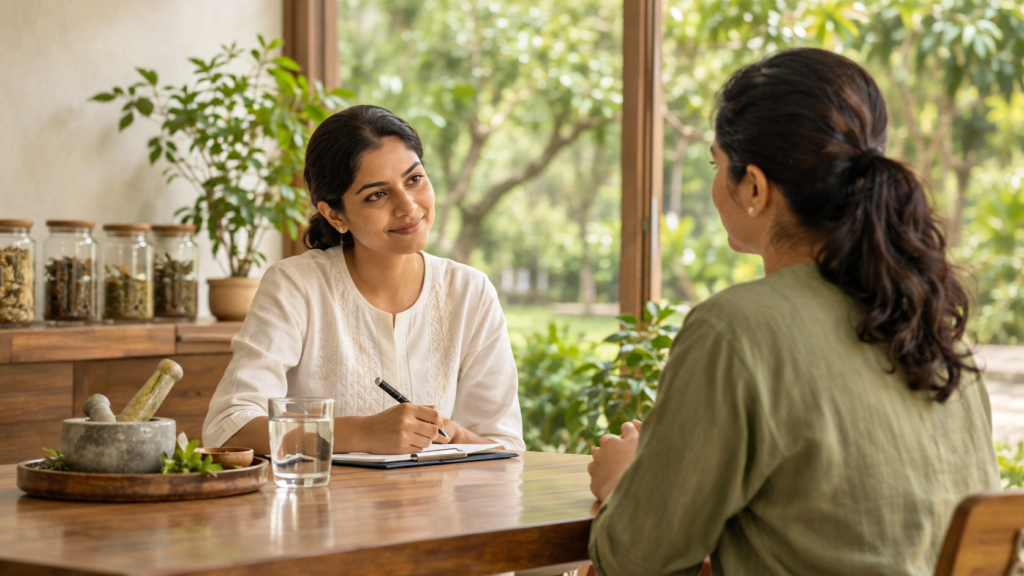
You have decided to explore naturopathy, but one question remains: what actually happens during the first consultation?
Will someone examine your medical history? Will you receive a strict diet plan? Are therapies recommended immediately?
For many people, these uncertainties make exploring a wellness retreat feel unfamiliar.
A first naturopathy consultation is an opportunity to discuss your everyday routines, health concerns and personal wellness goals. Rather than approaching everyone with identical recommendations, a thoughtful consultation considers individual circumstances before suggesting lifestyle practices.
Understanding the process can help you prepare meaningful questions and make informed decisions about your wellbeing.
What Is a Naturopathy Consultation?
Naturopathy is a complementary wellness approach that may incorporate nutrition, physical activity, relaxation and other lifestyle practices.
A consultation commonly involves discussing the person’s health history, current concerns, daily habits and environment.
According to the National Center for Complementary and Integrative Health, naturopathic approaches vary considerably, and the evidence supporting individual treatments is not equally strong. NCCIH
This makes professional judgement, transparent communication and realistic expectations essential.
A naturopathy consultation should complement appropriate medical care rather than replace necessary diagnosis, prescribed treatment or emergency services.
What Happens During Your First Naturopathy Consultation?
Although individual centres follow different procedures, several areas are worth discussing during an initial wellness assessment.
1. Understanding Your Medical and Lifestyle Background
A practitioner may ask about existing medical conditions, medications, previous treatments and current health concerns.
Lifestyle questions may cover your usual meals, physical activity, working hours, sleep patterns and daily environment.
The purpose is to understand your circumstances rather than evaluate one habit in isolation.
For example, a professional working irregular hours may require a different wellness routine from someone who follows a predictable daily schedule.
Being open about your circumstances helps make recommendations more practical and relevant.
2. Discussing Personal Wellness Goals
Not everyone explores naturopathy for the same reason.
Some people want to establish consistent eating habits. Others may be interested in incorporating regular movement, spending more time outdoors or developing a sustainable routine.
A useful consultation should distinguish between general wellbeing goals and concerns that require medical assessment.
It should also encourage realistic expectations rather than promise immediate results.
Why Personalised Wellness Assessments Matter
A lifestyle recommendation is only useful when someone can reasonably follow it.
Consider two people seeking to improve their everyday activity levels.
One enjoys morning walks but struggles with consistency.
The other travels frequently and has limited access to outdoor spaces.
Giving both individuals an identical schedule may overlook these differences.
A personalised wellness assessment considers preferences, practical limitations and existing routines.
The focus should be on identifying achievable adjustments rather than prescribing an unnecessarily demanding programme.
How to Prepare for a Naturopathy Consultation
A little preparation can make your conversation more productive.
Before attending, consider gathering:
- A list of current medications and supplements
- Relevant medical reports or previous diagnoses
- Information about existing health conditions
- A brief overview of your usual daily routine
- Questions about therapies, safety and expected outcomes
You do not need to create an elaborate wellness diary.
However, reflecting on your routine beforehand may help you identify what you genuinely want to address.
If you have a medical condition, are pregnant or take prescription medication, disclose this information before considering dietary restrictions, supplements or therapies.
What Should You Ask During the Consultation?
An informed participant should feel comfortable asking questions.
Useful questions include:
- What is the purpose of this recommended practice?
- What evidence supports its use?
- Are there any risks or contraindications?
- How will the recommendation fit into my existing routine?
- When should I seek advice from a medical doctor?
You can also ask about the practitioner’s qualifications and experience.
This is particularly important because training, professional standards and regulatory arrangements for naturopathy vary across jurisdictions. Digital Sansad
A credible wellness experience should welcome questions and acknowledge uncertainty where appropriate.
What to Expect at a Naturopathy Retreat in Pune
A residential wellness retreat offers an opportunity to explore everyday habits in an environment designed around intentional living.
Depending on the retreat and individual programme, experiences may include structured meals, gentle movement, outdoor activities, rest and guided wellness discussions.
However, specific services should always be confirmed directly with the provider.
At Deham Naturecure in Mulshi, Pune, the philosophy centres on nature-led living, personalised attention and a more conscious relationship with daily routines.
Its setting provides a meaningful context for exploring how surroundings, nourishment, movement and rest can become part of a considered lifestyle.
The value of such an experience lies in understanding which practices remain realistic after returning home.
Turning Consultation Insights Into Everyday Habits
One of the most useful outcomes of a wellness consultation is greater clarity about where to begin.
A complicated routine is not necessarily more effective than a manageable one.
For example, someone wishing to move more regularly might begin with short, comfortable walks rather than immediately adopting an intensive schedule.
Similarly, improving meal consistency may involve planning regular eating opportunities instead of following restrictive dietary rules.
Sustainable changes should reflect individual needs and medical considerations.
A consultation can provide guidance, but continued wellbeing depends on how appropriately those suggestions fit everyday life.
Conclusion: Begin With Understanding, Not Expectations
Your first naturopathy consultation should provide an opportunity to discuss your lifestyle, clarify wellness goals and explore suitable approaches with realistic expectations.
The most meaningful conversations consider medical history, individual preferences, available evidence and practical limitations.
Rather than searching for an instant transformation, focus on understanding which everyday choices deserve thoughtful attention.
If you are exploring a nature-led approach to holistic wellbeing, discover the wellness experiences at Deham Naturecure, Mulshi, and consider how personalised guidance and intentional living might fit into your routine.