You finish your morning workout, reach the office, and spend the next eight hours sitting through meetings, emails, and deadlines.
Sound familiar?
For many working professionals, exercise has become a scheduled activity, while movement throughout the day has almost disappeared.
But what happens between workouts matters too.
This is where movement snacks offer a refreshing perspective on everyday wellbeing.
Instead of treating physical activity as something that requires special clothing, equipment, or a dedicated hour, movement snacks encourage us to introduce small moments of activity into ordinary routines.
What Are Movement Snacks?
Movement snacks are short bursts of physical activity incorporated throughout the day.
They can be as simple as walking around the office, climbing a flight of stairs, performing gentle stretches, or standing up between meetings.
Unlike structured exercise sessions, movement snacks focus on making activity accessible during otherwise sedentary hours.
They are particularly relevant for people whose work involves prolonged sitting.
The idea is straightforward: rather than waiting for the perfect opportunity to exercise, find opportunities to move within your existing schedule.
Why Sitting Less Matters for Everyday Health
Modern convenience has significantly reduced the amount of physical movement required in daily life.
We sit while travelling, working, eating, attending meetings, and relaxing.
Even individuals who exercise regularly may spend substantial portions of their remaining day sitting.
The World Health Organization recommends limiting sedentary time and replacing it with physical activity, including light-intensity movement.
Prolonged sedentary behaviour is associated with increased risks of several chronic health conditions.
However, this does not mean sitting is inherently harmful or that everyone needs to remain constantly active.
It means regular movement deserves a place in our routines alongside planned exercise.
Can Movement Snacks Replace Exercise?
Not entirely.
Movement snacks are a useful addition to an active lifestyle, rather than a complete replacement for structured physical activity.
Adults are generally advised to aim for 150–300 minutes of moderate-intensity aerobic activity weekly, alongside muscle-strengthening activities on at least two days.
Short movement breaks can help reduce sedentary time, while longer exercise sessions contribute to broader fitness goals.
Both have their place.
Five Simple Movement Snacks for Busy Professionals
Building healthy daily movement habits does not require a dramatic lifestyle change.
Here are five practical ways to begin.
1. Walk Between Meetings
Instead of immediately opening another screen, spend two or three minutes walking after a meeting.
A short walk through the office or around your home introduces movement without disrupting your schedule.
2. Take the Stairs When Practical
If your mobility and fitness allow, choose stairs for shorter distances.
Climbing stairs can provide a convenient burst of physical activity without requiring additional equipment.
3. Introduce Standing Breaks
Set a gentle reminder to stand and move periodically during long working sessions.
There is no universally prescribed interval for everyone. Choose a frequency that feels practical and sustainable.
4. Move During Phone Conversations
When your surroundings permit, walk while taking audio calls that do not require screen-sharing or detailed note-taking.
This small change can make an otherwise sedentary task more active.
5. Practise Gentle Mobility Exercises
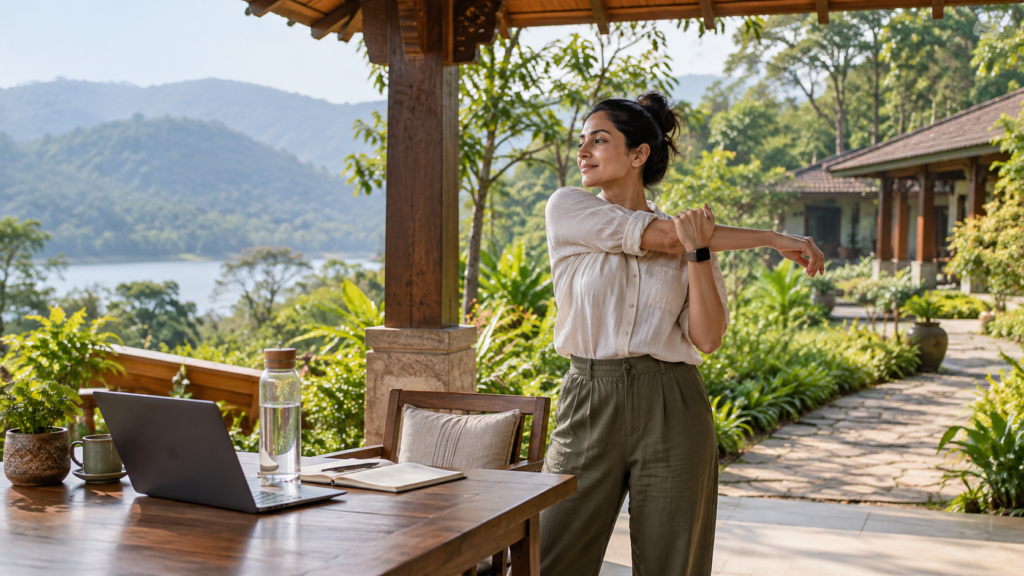
Shoulder rolls, ankle movements, and comfortable upper-body stretches can introduce movement during desk-based work.
Avoid forcing uncomfortable positions, particularly if you have existing mobility limitations.
The goal is regular, comfortable movement rather than intensity.
The Nature Cure Perspective: Movement as a Daily Rhythm
One meaningful principle of naturopathy-inspired living is recognising that wellbeing is influenced by everyday behaviours.
Physical activity does not need to exist separately from daily life.
Walking through a garden, spending time outdoors, participating in gentle movement practices, and performing ordinary physical tasks can all contribute to a more active routine.
At Deham Naturecure in Mulshi, Pune, this philosophy aligns with a broader emphasis on mindful routines, nature exposure, appropriate physical activity, balanced nourishment, and rest.
Rather than viewing wellbeing only through individual activities, the approach encourages greater awareness of how different lifestyle habits fit together.
Movement becomes part of the day instead of another obligation added to it.
How to Make Movement Breaks a Lasting Habit
The biggest challenge is often consistency.
Instead of setting ambitious targets immediately, begin with existing moments in your schedule.
Attach movement to familiar activities, such as finishing a meeting, refilling a water bottle, or taking a lunch break.
Keep the activity manageable and gradually build from there.
People with medical conditions, balance concerns, or physical limitations should adapt activities with appropriate professional guidance.
Most importantly, avoid turning movement snacks into another performance metric.
Their purpose is to make daily life more active, not more complicated.
Small Movements, A More Conscious Lifestyle
Healthy living is shaped by repeated choices, not only occasional efforts.
A workout matters. So does what happens during the hours surrounding it.
Movement snacks remind us that caring for the body can begin with something as ordinary as leaving the chair and taking a short walk.
At Deham Naturecure, we encourage a thoughtful relationship with movement, rest, nourishment, and nature.
Explore Deham Naturecure’s nature-led wellness experiences in Mulshi and discover how simple, sustainable routines can become part of everyday living.