You can walk several kilometres, climb stairs without difficulty and exercise regularly, yet still struggle to stand on one leg for ten seconds.
It reveals something important about physical fitness: strength and endurance are only part of the picture. Balance, coordination and controlled movement also contribute to how confidently we navigate everyday life.
Balance exercises for adults are often overlooked until someone experiences instability or difficulty with routine movements. However, incorporating balance training into a preventive wellness routine can help maintain physical function and independence as we age.
What Is Balance and Why Does It Matter?
Balance is the ability to maintain stability while standing, moving or changing positions.
It depends on several systems working together, including vision, the inner ear, muscles, joints and the nervous system.
Consider everyday situations such as stepping over an obstacle, walking on uneven ground or reaching for something on a high shelf.
Each activity requires your body to make small adjustments to maintain stability.
As we age, changes in muscle strength, sensation and coordination can affect this ability.
Maintaining balance is therefore not just about avoiding falls. It also supports comfortable, confident movement throughout daily life.
How Balance Exercises Support Healthy Ageing
1. They Help Maintain Functional Mobility
Functional mobility refers to the ability to perform ordinary movements independently.
Getting out of a chair, carrying groceries and navigating stairs require coordinated muscle activity.
Balance and coordination exercises challenge the body to adjust its position while maintaining control, supporting the movement skills involved in these tasks.
2. They Contribute to Fall Prevention
The World Health Organization recommends that adults aged 65 and above incorporate activities emphasising functional balance and strength on at least three days each week.
These activities can improve functional capacity and reduce fall risk when performed appropriately and consistently.
Balance training is one part of fall prevention. Vision, medication effects, footwear and home safety also deserve attention.
3. They Encourage Better Movement Awareness
Balance requires attention to posture, weight distribution and movement.
Practising slowly can help individuals notice how their bodies respond to changes in position.
This awareness fits naturally into holistic wellness practices that encourage intentional movement rather than focusing exclusively on exercise intensity.
Simple Balance Exercises for Adults to Try
Balance exercises do not always require specialised equipment or an elaborate fitness routine.
These beginner-friendly movements can be adapted to individual abilities.
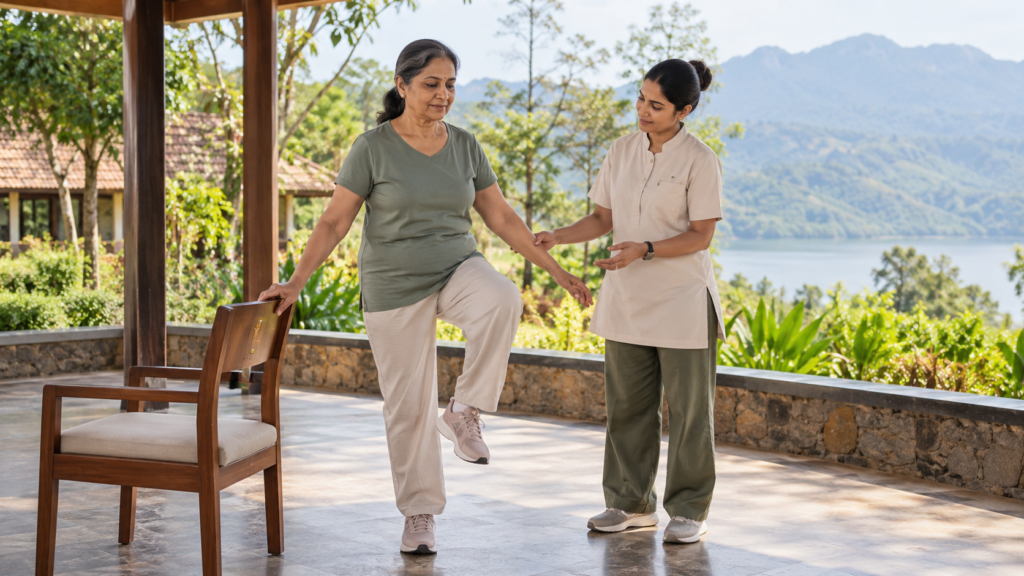
Standing on One Leg
Stand beside a sturdy counter or chair.
Gently lift one foot and maintain your position for a few seconds, holding the support as needed.
Switch legs and repeat.
Focus on maintaining a comfortable, upright posture rather than achieving a particular duration.
Heel-to-Toe Walking
Walk slowly along a clear, flat surface, positioning the heel of one foot near the toes of the other.
Keep a stable support nearby and take controlled steps.
This exercise challenges coordination and stability during movement.
Controlled Sit-to-Stand Movements
Sit on a stable chair with your feet firmly on the floor.
Stand up slowly, using your hands for assistance if necessary, then return to sitting with control.
This movement combines lower-body strength with functional stability.
Safety matters: Anyone experiencing dizziness, recurrent falls, significant instability or mobility limitations should seek medical or physiotherapy guidance before attempting new balance exercises.
Why Balance Training Should Be Combined with Strength and Walking
One common misconception is that daily walking provides every form of exercise the body needs.
Walking offers valuable aerobic activity, but a comprehensive routine also includes muscle-strengthening and balance work.
Strength helps muscles support movement. Balance training develops stability during changing positions, while aerobic activity supports cardiovascular fitness.
Together, these activities contribute to a broader approach to preventive wellness.
Rather than replacing walking or other exercise, balance training can complement an existing routine.
Bringing Mindful Movement into Everyday Life
Improving balance naturally does not mean relying on complicated techniques.
It begins with practising appropriate movements regularly.
Choose a safe environment, avoid rushing and focus on the quality of each movement.
For older adults, combining balance and strengthening exercises several times a week is consistent with established physical activity guidance.
The right intensity and progression depend on individual fitness, health conditions and movement ability.
A sustainable approach also means recognising when professional supervision is more appropriate than independent exercise.
A Holistic Perspective on Movement at Deham NatureCure
At Deham NatureCure in Mulshi, Pune, wellness is approached through mindful living, personalised care and a closer relationship with nature.
This philosophy recognises that long-term well-being involves more than addressing immediate discomfort. It also includes developing habits that support everyday physical and mental functioning.
Gentle movement, appropriate physical activity, nourishing routines and greater body awareness can contribute to a balanced lifestyle.
Within a thoughtfully structured wellness experience, individuals can take time to understand their movement habits and identify realistic practices to continue at home.
Such practices complement, rather than replace, medical assessment or rehabilitation when these are needed.
Conclusion: Better Balance Begins with Everyday Movement
Balance exercises for adults deserve attention because stability influences many ordinary activities we rarely think about.
A few carefully chosen movements, practised consistently and safely, can contribute to better coordination and functional confidence.
The objective is not to perform increasingly difficult exercises. It is to preserve the ability to move comfortably, confidently and independently over time.
Explore Deham NatureCure’s wellness experiences in Mulshi, Pune, and discover a nature-led approach to mindful movement, personalised well-being and sustainable lifestyle habits.