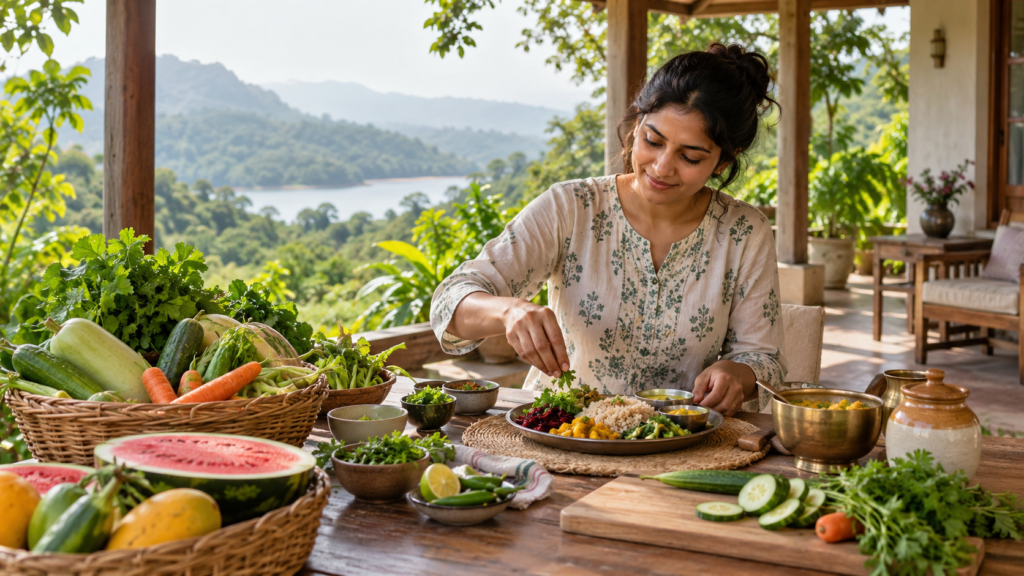
A mango in summer, fresh green peas in winter, or a warm homemade meal on a rainy afternoon. Some foods naturally feel connected to particular times of the year.
Yet modern shopping habits have made it possible to find many ingredients across seasons, often without considering when they naturally grow.
This raises an interesting question: should the season influence what we eat?
Seasonal eating in India offers a practical way to approach food with greater awareness. Rather than following restrictive diets or complicated nutritional trends, it encourages choosing ingredients that are naturally available during different times of the year.
At Deham Naturecure, this philosophy aligns with a broader belief that everyday wellbeing is supported by mindful choices, nourishing food and a closer relationship with nature.
What Is Seasonal Eating?
Seasonal eating means choosing fruits, vegetables and other foods during the periods when they are naturally harvested in a particular region.
In India, seasonal availability varies considerably across different climates and agricultural regions.
For example, mangoes are commonly associated with summer, while vegetables such as carrots and green peas are often more abundant during cooler months in many parts of the country.
Eating seasonally does not require eliminating every ingredient that grows outside its natural season.
Instead, it encourages greater awareness of freshness, local availability, food variety and personal dietary needs.
The objective is to create a balanced relationship with food rather than follow rigid restrictions.
Understanding the Benefits of Seasonal Eating
Seasonal eating is often discussed in traditional wellness practices, but its practical advantages extend beyond tradition.
1. Encourages Greater Dietary Variety
Different seasons bring changing selections of fruits and vegetables.
Choosing from these seasonal options can encourage people to diversify their meals.
For example, incorporating different leafy vegetables, gourds, fruits and root vegetables throughout the year exposes the diet to a wider range of nutrients.
However, nutritional balance still depends on the overall diet, including adequate protein, fibre, fats and other essential nutrients.
2. Encourages Awareness of Food Sources
Seasonal eating encourages people to think about where their food comes from.
Understanding which ingredients are grown locally and when they are harvested can support more informed purchasing decisions.
Local produce may sometimes require less transport, although its overall environmental impact also depends on farming methods, storage and supply chains.
3. Makes Meal Planning More Intentional
Choosing seasonal ingredients can simplify an important question:
What should we cook this week?
Instead of beginning with complicated recipes, meals can be planned around suitable fresh ingredients.
This approach encourages flexibility while keeping everyday cooking practical.
A Practical Guide to Seasonal Foods in India
India’s varied geography means no single seasonal food calendar applies everywhere.
However, broad seasonal patterns can help guide everyday meal planning.
Summer: Focus on Variety and Hydration
During warmer months, foods such as cucumber, watermelon, muskmelon and certain gourds may be commonly available.
These ingredients can contribute water and nutrients to the diet.
However, water-rich foods do not replace the need for adequate fluid intake.
A practical summer meal might include dal, seasonal vegetables, curd where suitable, and fresh fruit.
Monsoon: Prioritise Food Safety and Fresh Preparation
The rainy season can present additional food storage and hygiene challenges.
Washing produce thoroughly, storing perishables appropriately and cooking food safely remain important.
Seasonal vegetables can be incorporated into freshly prepared meals without relying on restrictive monsoon diets.
Winter: Explore Seasonal Vegetables
In many parts of India, winter brings ingredients such as carrots, radishes, peas, cauliflower and leafy greens.
These can be included in soups, sabzis and traditional home-cooked meals.
The focus should remain on nutritional variety rather than assuming particular ingredients provide special medicinal benefits because they are seasonal.
The Connection Between Seasonal Eating and Sattvic Living
Traditional sattvic eating commonly emphasises simple preparations, moderation, freshness and mindful food choices.
Although interpretations vary, the broader philosophy encourages awareness of how food is prepared and consumed.
Seasonal eating complements this approach by encouraging people to select ingredients thoughtfully.
A simple meal prepared with seasonal vegetables, whole grains and appropriate protein sources can be nourishing without being elaborate.
At Deham Naturecure, the emphasis on sattvic living and mindful routines reflects this appreciation for simplicity.
Food becomes part of a larger lifestyle philosophy involving rest, movement, awareness and intentional everyday habits.
How to Practise Seasonal Eating in a Busy Lifestyle
Adopting seasonal eating does not require completely changing your household routine.
A few practical adjustments can make it easier.
Start with local produce: Observe which fruits and vegetables are abundant at nearby markets.
Plan flexible weekly meals: Choose recipes that allow one seasonal vegetable to replace another.
Maintain nutritional balance: Continue including appropriate protein sources, whole grains and other essential foods.
Avoid unnecessary restrictions: Seasonal eating should complement individual nutritional needs, not override them.
Pay attention to preparation: Fresh ingredients still require safe washing, handling and storage.
Consistency matters more than achieving a perfectly seasonal diet.
How Deham Naturecure Encourages Nature-Led Living
Wellbeing is shaped by the everyday decisions people make about food, movement, rest and their surroundings.
At Deham Naturecure in Mulshi, Pune, the philosophy of holistic wellness encourages individuals to become more attentive to these choices.
Through a nature-led environment, sattvic meals and mindful lifestyle experiences, Deham offers an opportunity to explore a more intentional relationship with daily routines.
The focus is not on promoting one ingredient as a solution to health concerns.
It is on understanding how balanced, sustainable habits can become part of everyday living.
Conclusion: Let the Seasons Bring Variety to Your Plate
Seasonal eating in India is a simple reminder that food choices can reflect the natural environment around us.
It encourages dietary variety, thoughtful shopping and a deeper appreciation of familiar ingredients.
There is no need to follow a rigid seasonal food chart or abandon favourite meals.
Instead, begin by noticing what is naturally available, choosing balanced preparations and making eating a more intentional part of your routine.
At Deham Naturecure, mindful nourishment is one part of a broader approach to living in harmony with nature.
Explore Deham’s nature-led wellness experiences in Mulshi, Pune, and discover how simple, sustainable lifestyle choices can become part of a more balanced way of living.