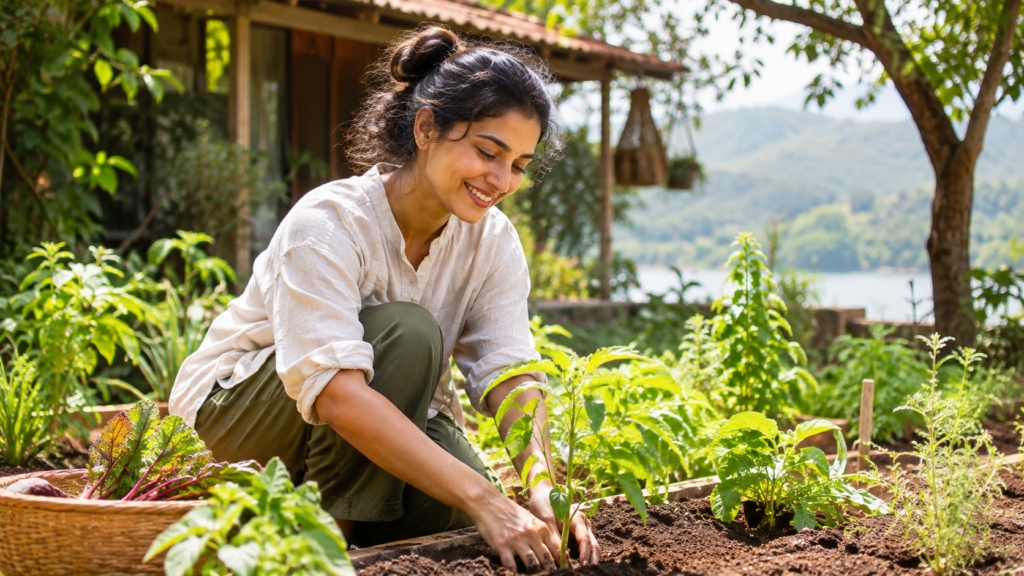
A plant doesn’t grow faster because you check it every hour.
It needs the right conditions, consistent care, and time.
For professionals accustomed to immediate responses, measurable results, and constantly changing priorities, this can be a refreshing experience.
Gardening offers something increasingly uncommon in modern routines: an activity where progress cannot always be rushed.
The growing interest in gardening for mental health reflects a broader recognition that ordinary interactions with nature may support emotional wellbeing.
From tending balcony plants to maintaining a small kitchen garden, gardening creates opportunities for gentle movement, attention, and meaningful engagement with the natural environment.
What Is Gardening for Mental Health?
Gardening for mental health involves participating in plant-related activities to support emotional wellbeing, relaxation, and everyday functioning.
These activities may include watering plants, preparing soil, growing herbs, pruning leaves, or observing seasonal changes.
Therapeutic gardening is sometimes incorporated into structured wellbeing programmes under professional guidance. However, everyday gardening does not need to be a formal therapeutic intervention to provide an enjoyable, purposeful activity.
Research reviewed by the Royal Horticultural Society suggests that gardening is associated with positive outcomes for physical activity, perceived stress, and mental wellbeing.
These findings are encouraging, although individual experiences vary and gardening should not be considered a replacement for mental healthcare.
Why Gardening Can Support Emotional Wellbeing
1. It Encourages Focused Attention
Many daily activities involve switching between messages, conversations, and responsibilities.
Gardening offers an opportunity to concentrate on one tangible task.
Removing dried leaves, checking soil moisture, or carefully repotting a plant requires observation and attention.
This focused engagement may help people create a mental break from competing demands without requiring complicated mindfulness techniques.
2. It Introduces Gentle Physical Activity
Gardening naturally includes activities such as standing, walking, bending, and reaching.
Depending on their intensity, these movements can contribute to daily physical activity.
The Centers for Disease Control and Prevention recognises physical activity as beneficial for mental and physical health, including supporting emotional wellbeing.
Gardening can complement regular exercise, although its intensity varies considerably between activities.
3. It Creates a Sense of Purpose
Caring for a living plant introduces a simple responsibility.
A seedling needs attention. Soil conditions change. New leaves appear gradually.
These observations can make gardening personally rewarding.
Unlike tasks measured exclusively through deadlines or productivity, gardening allows individuals to appreciate gradual development.
The satisfaction comes from participating in the process rather than controlling every outcome.
How to Practise Mindful Gardening at Home
Mindful gardening involves approaching plant care with greater awareness instead of treating it as another household obligation.
You do not need a large garden or specialised equipment.
Start With One Manageable Plant
Choose a plant suited to your available sunlight, space, and local climate.
Understand its watering requirements before establishing a routine.
Beginning with one plant makes it easier to observe changes without creating unnecessary maintenance responsibilities.
Notice More Than Growth
Pay attention to the texture of leaves, the condition of the soil, and how natural light changes throughout the day.
These observations encourage engagement with your immediate environment.
Rather than checking constantly for new growth, allow yourself to appreciate the activity itself.
Make Gardening a Shared Experience
Families can involve children in age-appropriate planting, watering, and observation activities.
Growing herbs or maintaining a small container garden can introduce conversations about patience, seasonal changes, and caring for living things.
Shared gardening also provides opportunities for meaningful interaction without relying on screens.
Gardening for Working Professionals: Making It Practical
A demanding schedule does not necessarily prevent someone from maintaining a small garden.
The important consideration is choosing an activity that fits comfortably into existing routines.
For apartment residents, a balcony, windowsill, or suitable indoor growing area may be sufficient.
Working professionals can consider:
- Spending a few minutes observing plants before beginning work.
- Setting aside a regular time for watering and basic maintenance.
- Growing suitable herbs in small containers.
- Using weekend time for repotting or reorganising plants.
These activities should remain manageable.
If plant care becomes another source of pressure, simplifying the arrangement may be more helpful than adding responsibilities.
How Gardening Connects With Nature-Led Wellness
Gardening reflects an important principle of sustainable wellbeing: meaningful habits can emerge from ordinary daily activities.
At Deham Naturecure, surrounded by the natural landscape of Mulshi, Pune, this perspective aligns with a philosophy centred on mindful living, simplicity, and a conscious relationship with nature.
Holistic wellbeing considers how everyday routines, movement, nourishment, rest, and surroundings influence the way people live.
Gardening brings several of these elements together through a practical activity.
It encourages participation in natural processes while reminding us that consistency matters more than immediate results.
For individuals seeking a more intentional lifestyle, such practices can become part of a broader preventive wellness approach.
Practising Gardening Safely
Gardening should remain comfortable and appropriate to individual abilities.
Use suitable tools, avoid excessive strain, and take precautions during hot weather.
People with allergies, mobility limitations, or relevant medical conditions may need to adapt activities or seek professional guidance.
Wear gloves when appropriate, wash hands after handling soil, and follow safe handling instructions for gardening products.
These simple precautions help make plant care a more enjoyable experience.
Conclusion: Grow a Habit, Not Just a Garden
Gardening for mental health offers a practical opportunity to introduce nature, attention, and gentle activity into everyday life.
Its value does not depend on owning a large garden or becoming an experienced gardener.
A small plant, cared for consistently, can provide moments of observation, responsibility, and enjoyment.
The benefits are best understood as part of a balanced lifestyle that also includes appropriate healthcare, movement, rest, and supportive relationships.
For those interested in exploring a deeper relationship with nature and intentional living, Deham Naturecure in Mulshi, Pune, offers a nature-led perspective on holistic wellbeing.
Explore Deham Naturecure’s wellness experiences and discover how simple, sustainable lifestyle practices can find a place in your everyday routine.