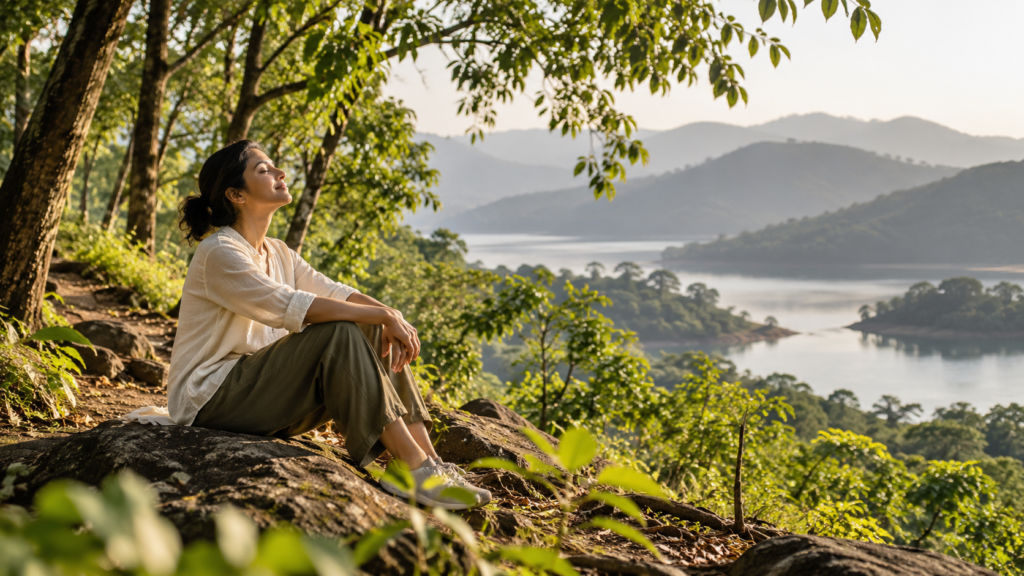
When was the last time you spent time outdoors without checking your phone, counting steps or thinking about your next task?
For many people, even moments of rest have become activities to complete. A morning walk becomes a fitness goal. A weekend getaway becomes a packed itinerary. Somewhere along the way, simply experiencing nature has become surprisingly unfamiliar.
This is where forest bathing, a mindful practice rooted in Japanese wellness traditions, offers a different perspective.
Rather than treating time outdoors as another achievement, forest bathing encourages us to slow down, observe our surroundings and reconnect with the natural environment.
But what does science say about its benefits, and how can we incorporate it into everyday life?
What Is Forest Bathing?
Forest bathing, traditionally known as Shinrin-yoku, originated in Japan and refers to immersing oneself in the atmosphere of a forest.
Despite its name, the practice does not involve swimming or bathing in water.
Instead, it involves experiencing nature through your senses: noticing the movement of leaves, listening to birds, observing natural textures and becoming aware of your surroundings.
Unlike hiking, where reaching a destination may be the objective, forest bathing focuses on the experience itself.
The intention is not to cover a particular distance or achieve a fitness target, but to create space for quiet observation.
The Science Behind Forest Bathing Benefits
Nature has long been associated with relaxation, but research is increasingly examining how natural environments influence psychological well-being.
1. Supporting Stress Management
Modern lifestyles often involve continuous stimulation, workplace demands and limited opportunities for mental recovery.
Research suggests that forest-based activities may help reduce perceived psychological stress.
A 2026 systematic review and meta-analysis involving 25 studies reported improvements in stress-related outcomes following forest therapy interventions. However, differences between studies mean these findings should be interpreted cautiously.
PubMed
Forest bathing can therefore be considered a complementary wellness practice rather than a treatment for stress-related medical conditions.
2. Encouraging Mental Relaxation
Constantly switching between messages, meetings and responsibilities demands sustained attention.
Natural environments provide opportunities to engage with surroundings without the same level of task-oriented concentration.
The World Health Organization recognises that access to green spaces can support psychological relaxation, physical activity and overall well-being.
World Health Organization
Activities such as mindful walking in nature may offer a practical way to introduce restorative pauses into a demanding schedule.
3. Creating Opportunities for Gentle Movement
Forest bathing does not require intense exercise.
Walking slowly along a safe natural pathway, stopping to observe the surroundings or sitting quietly outdoors can all form part of the experience.
This makes nature-based activities adaptable to different ages, preferences and physical abilities.
However, individuals with mobility limitations or existing health conditions should choose accessible environments and activities appropriate to their needs.
How to Practise Forest Bathing in Everyday Life
One of the most appealing aspects of forest bathing in India is that it does not necessarily require travelling to a dense forest.
A quiet garden, tree-lined walking path or accessible green space can provide opportunities for mindful engagement with nature.
Start With a Simple 20-Minute Practice
Try incorporating these steps into your routine:
- Choose a comfortable location. Find a safe, relatively quiet green space with minimal distractions.
- Keep your phone away. Allow yourself to experience the environment without constant notifications.
- Walk without rushing. Move at a comfortable pace rather than focusing on distance.
- Engage your senses. Notice natural sounds, colours, textures and changes in the surrounding air.
- Pause and observe. Spend a few moments sitting quietly or watching the environment around you.
Twenty minutes is simply a manageable starting point, not a scientifically established minimum.
Consistency and personal comfort matter more than following a rigid schedule.
Why Natural Surroundings Matter in Holistic Wellness
Nature therapy for stress relief becomes particularly meaningful when considered alongside broader lifestyle habits.
Time outdoors cannot replace adequate sleep, balanced nutrition, physical activity or appropriate medical care.
However, it can complement these foundations by encouraging people to create intentional moments of rest.
This perspective aligns with naturopathy’s emphasis on daily routines, lifestyle awareness and the relationship between individuals and their environment.
Rather than viewing well-being as a collection of isolated treatments, holistic wellness considers how everyday choices work together.
Experience Nature More Mindfully at Deham Naturecure
Located amid the natural surroundings of Mulshi, Pune, Deham Naturecure embraces a wellness philosophy centred on personalised care, mindful living and sustainable lifestyle practices.
Its nature-inspired environment offers an opportunity to step away from demanding routines and reconsider how rest, movement and personal well-being fit into everyday life.
For individuals exploring a wellness retreat near Pune, this approach encourages something valuable: making space for healthier habits without expecting instant transformation.
Ultimately, the benefits of spending time in nature are not about escaping everyday responsibilities. They are about developing a more intentional relationship with rest and well-being.
Explore Deham Naturecure’s holistic wellness experiences in Mulshi and discover how a slower, more mindful approach to living can become part of your routine.