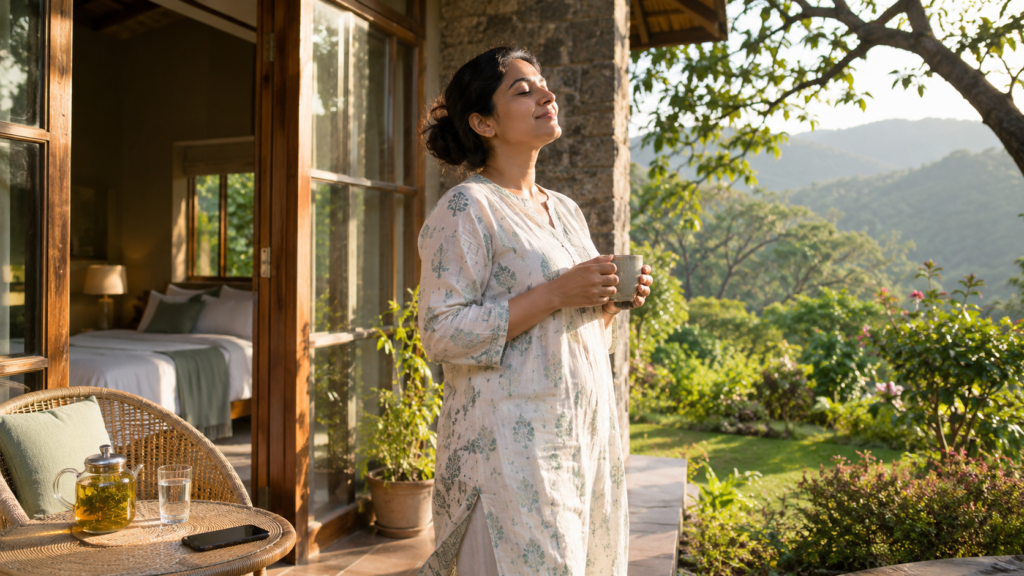
Think about the first hour of your morning.
You wake up, check your phone, get ready, travel to work, and settle into an indoor environment. By the time you notice the weather outside, half your day may have passed.
For many working professionals, this routine feels normal. Yet it overlooks something surprisingly important: our bodies use natural light to understand the time of day.
The benefits of morning sunlight extend beyond pleasant weather or a refreshing start. Daylight helps regulate our internal biological clock, influencing when we feel awake and when our bodies prepare for rest.
Understanding this connection offers a practical way to approach everyday wellbeing.
Understanding the Connection Between Sunlight and Your Body Clock
Our bodies follow an approximately 24-hour biological cycle known as the circadian rhythm.
This internal system helps coordinate sleep, wakefulness, hormone activity, and several other physiological processes.
Natural light is one of its strongest environmental signals.
When daylight reaches our eyes, specialised light-sensitive cells communicate with the brain’s central clock, helping it coordinate daily rhythms.
Morning light generally encourages an earlier circadian schedule, while bright light late in the evening can shift that schedule later.
This explains why natural light and circadian rhythm are closely connected.
It also highlights an important distinction: maintaining a healthy daily rhythm involves more than simply deciding what time to wake up.
Three Benefits of Morning Sunlight for Everyday Wellbeing
1. Supporting a Consistent Sleep-Wake Cycle
One of the most established benefits of natural light exposure is its role in regulating circadian timing.
Morning daylight helps reinforce the distinction between daytime activity and nighttime rest.
For people following conventional daytime schedules, regular morning light exposure may support more consistent sleep and waking patterns.
However, sunlight is not a substitute for adequate sleep, and individual responses can vary.
2. Encouraging Daytime Alertness
Light exposure influences how our biological clock coordinates alertness throughout the day.
A brighter daytime environment supports the body’s natural wakefulness signals.
This is particularly relevant for professionals who spend long hours inside offices, commuting between enclosed spaces, or working from home.
Stepping outdoors introduces a natural environmental cue that indoor lighting may not provide as strongly.
3. Creating an Opportunity for Intentional Movement
Morning sunlight does not need to become another complicated wellness practice.
It can accompany ordinary activities such as walking, tending to plants, or spending a few quiet minutes outdoors.
Combining daylight exposure with comfortable movement makes the habit easier to integrate into everyday life.
The value lies in consistency rather than turning every morning into an elaborate routine.
How Modern Indoor Living Changes Our Relationship With Daylight
Many urban environments are designed around convenience.
Air-conditioned offices, covered parking, indoor exercise facilities, and artificial lighting allow us to complete much of our day without stepping outside.
While these conveniences serve important purposes, they can also reduce our exposure to natural daytime light.
Research suggests that modern indoor environments often provide less daytime brightness than outdoor settings.
This matters because the body responds not only to the presence of light but also to its intensity and timing.
A useful question is therefore not simply, “Did I spend time outside today?”
It is, “Does my daily environment provide enough distinction between day and night?”
How to Build a Healthier Morning Routine Naturally
You do not need an elaborate schedule to become more intentional about daylight.
Consider these practical habits:
- Step outdoors after waking: Spend a comfortable amount of time in natural morning light when conditions allow.
- Pair sunlight with movement: Take a relaxed walk or complete gentle mobility exercises.
- Create consistency: Aim for a similar waking schedule whenever practical.
- Use outdoor spaces thoughtfully: Choose a garden, shaded courtyard, or nearby walking path.
- Respect sun safety: Avoid staring directly at the sun, and follow appropriate UV protection guidance.
There is no universal exposure duration suitable for every person. Climate, season, individual sensitivity, and daily schedules matter.
In India’s warmer regions, avoiding excessive heat and strong ultraviolet exposure is particularly important.
The Role of Natural Rhythms in Naturopathy
Naturopathy places considerable emphasis on daily routines, environmental awareness, appropriate movement, nourishment, and rest.
Within this broader philosophy, daylight is an accessible part of a nature-led lifestyle.
At Deham Naturecure in Mulshi, Pune, the surrounding natural environment offers opportunities to experience everyday routines with greater attention to the changing rhythms of the day.
The intention is not to present sunlight as a treatment for every health concern.
Instead, it is to recognise how simple environmental experiences can complement a balanced approach to wellbeing.
A Healthier Day May Begin With Your Environment
Modern wellness discussions often concentrate on what we should add to our routines.
Natural daylight offers another perspective: sometimes, improving everyday habits begins with paying attention to what our surroundings already provide.
Understanding the benefits of morning sunlight can help us make more informed choices about our working hours, home environments, and daily activities.
Explore Deham Naturecure’s nature-led wellness experiences and discover a more intentional approach to everyday living.