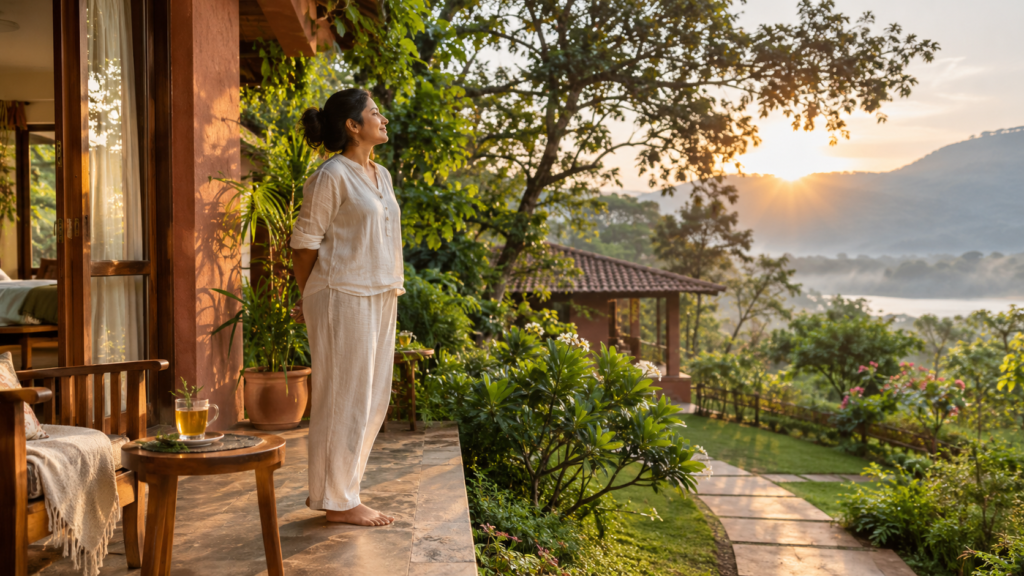
Your morning begins with an alarm, a quick glance at your phone, and perhaps a cup of coffee before the workday takes over. By the time you step outside, several hours may have passed.
While we often associate better sleep with what happens before bedtime, the way we begin our mornings also matters.
One of the simplest yet frequently overlooked habits is exposure to natural daylight. Understanding morning sunlight benefits can help us build a healthier relationship with sleep, daily energy, and our body’s natural rhythms.
Understanding Your Body’s Internal Clock
Our bodies follow an internal timing system known as the circadian rhythm. This approximately 24-hour cycle influences sleep, alertness, hormone activity, body temperature, and several other physiological processes.
Natural light is one of the most important environmental signals that helps synchronise this internal clock.
When daylight enters our eyes, specialised cells send signals to the brain that help regulate wakefulness and the timing of sleep-related processes.
As evening approaches and light decreases, the body begins preparing for rest.
However, irregular sleeping hours, limited daytime light exposure, and excessive artificial lighting at night can interfere with these natural signals.
This is why understanding the connection between circadian rhythm and sleep is an important part of preventive wellness.
How Morning Sunlight Supports Better Sleep
Morning daylight can help reinforce the distinction between daytime activity and nighttime rest.
For people who follow a conventional daytime schedule, exposure to bright light after waking can encourage an earlier circadian timing, potentially making it easier to feel sleepy at an appropriate hour.
Three important benefits include:
1. Supporting a Consistent Sleep-Wake Cycle
Regular morning light exposure, combined with consistent sleeping and waking times, helps reinforce the body’s daily rhythm.
Over time, this consistency can support more predictable sleep patterns.
2. Encouraging Daytime Alertness
Natural daylight provides an environmental signal that promotes wakefulness.
Spending time outdoors during the morning may help people feel more alert, particularly when their routine otherwise involves prolonged periods indoors.
3. Creating a Healthier Evening Routine
Morning light works best alongside appropriate evening habits.
Reducing exposure to bright artificial light before bedtime helps avoid sending conflicting signals to the body’s internal clock.
Together, these practices support healthier sleep timing without relying on complicated routines.
A Healthy Morning Routine Inspired by Nature
Building a healthy morning routine does not require waking up before sunrise or following an elaborate wellness programme.
Small, consistent practices can be more sustainable.
Begin with natural daylight. Spend a little time outdoors after waking, whenever practical. A short walk in a shaded outdoor space can offer useful daylight exposure without requiring direct sunbathing.
Introduce gentle movement. Walking, stretching, or comfortable yoga movements can help establish an active start to the day.
Eat without rushing. Give yourself time for a balanced breakfast when it suits your appetite and daily schedule. Mindful eating encourages greater awareness of hunger, fullness, and food choices.
Maintain regular timings. Consistency in waking, meals, physical activity, and bedtime can make healthy habits easier to maintain.
Protect your evenings. Reduce unnecessary screen exposure and bright lighting close to bedtime while allowing adequate time for sleep.
These are practical natural ways to improve sleep quality, although individual responses will vary.
Does Morning Sunlight Mean Spending Hours in the Sun?
Not at all.
The objective is to experience natural daylight, not prolonged exposure to intense ultraviolet radiation.
In India’s warmer months, comfortable early-morning outdoor conditions, shaded spaces, and appropriate sun protection are particularly important.
There is no universal duration of sunlight exposure that guarantees better sleep.
Individual needs depend on lifestyle, geographical conditions, sleep schedules, and health circumstances.
People experiencing persistent insomnia, excessive daytime sleepiness, or suspected sleep disorders should seek professional medical guidance rather than relying on sunlight exposure alone.
Reconnecting with Natural Rhythms at Deham Naturecure
Modern lifestyles often leave limited opportunities to reconnect with natural surroundings.
At Deham Naturecure, a holistic wellness retreat in Mulshi, Pune, the philosophy of well-being extends beyond isolated health practices.
The emphasis is on mindful living, naturopathy-inspired wellness, personalised care, and sustainable lifestyle choices.
Surrounded by nature, guests can explore a slower rhythm of living, creating space for mindful movement, nourishing food choices, rest, and greater awareness of everyday habits.
The intention is not to promise an immediate transformation, but to encourage a more thoughtful relationship with personal well-being.
Better Wellness Begins with Everyday Choices
Improving well-being does not always begin with major lifestyle changes.
Sometimes, it starts with something as familiar as stepping outdoors in the morning, maintaining a consistent routine, and recognising the body’s need for both activity and rest.
Natural daylight is one meaningful part of that balance.
Explore Deham Naturecure’s nature-led wellness experiences in Mulshi, Pune, and discover how mindful daily habits can become part of a more sustainable approach to well-being.